


Why CGT Valuation Is Important for Property Tax Reporting
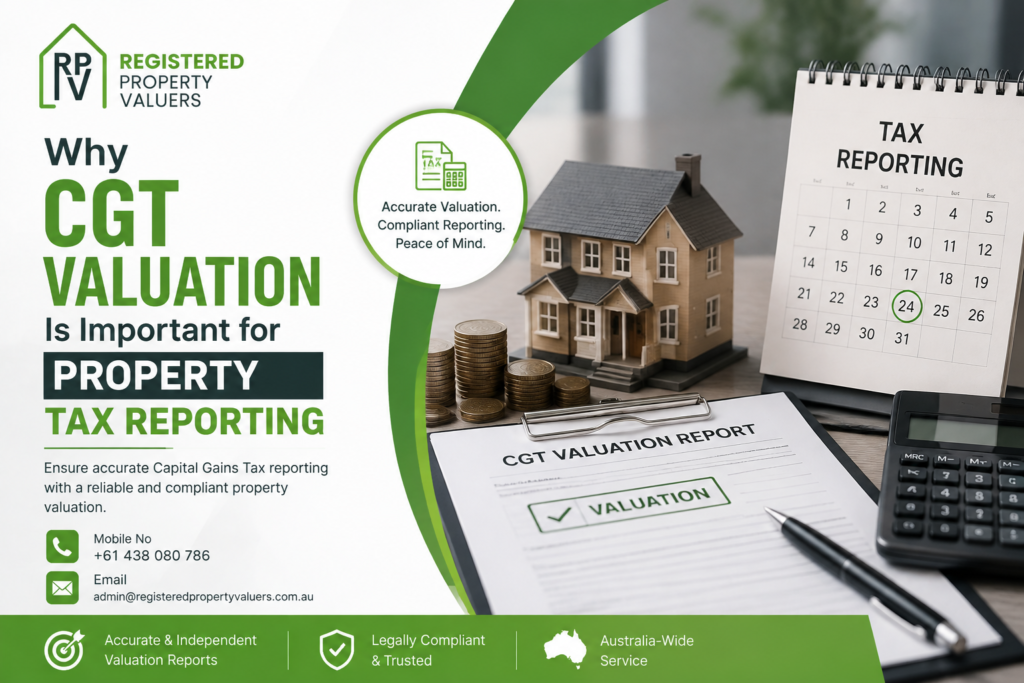
Capital gains tax reporting on property depends on far more than the price shown on a contract of sale. Establishing the correct cost base, applying the right exemptions, and reporting an accurate capital gain or loss may all rely on a reliable market value figure at specific points in a property’s ownership history. A professional CGT valuation can provide that figure, giving property owners and their accountants defensible evidence to support their tax reporting if the calculation is later reviewed by the ATO.
This guide explains why CGT valuation matters for property tax reporting, the situations in which one may be required, and what separates a properly prepared valuation from a rough estimate that may not provide sufficient support during a tax review.
SUMMARY
What This Article Covers
This guide explains what a CGT valuation is and why an accurate market value figure matters so much for property tax reporting. It covers the situations that commonly require a CGT valuation, including a change of use, inherited property, partial main residence exemptions, and subdivided land, along with what a compliant report needs to demonstrate. It also answers the questions property owners and their accountants ask most often about this type of valuation.
What a CGT Valuation Actually Establishes
A CGT valuation is an independent assessment of a property’s market value at a specific point relevant to a capital gains tax calculation, such as the date a property first became income-producing, the date it was inherited, or the date a portion of land was subdivided. This figure feeds directly into the cost base or capital proceeds used to calculate a taxable gain or loss.
Because capital gains tax calculations can involve significant amounts, an inaccurate or unsupported market value figure creates real risk, both in terms of overpaying tax unnecessarily and in terms of exposure if the reported figure is ever reviewed and found to understate a genuine gain.
Why the ATO Requires an Independent Market Value
When tax law requires a property valuation, the ATO expects the market value to be objective and supportable. A valuation from a suitably qualified independent valuer is often the strongest approach for complex or high-value property, although it is not mandatory in every circumstance.
Common Situations That Require a CGT Valuation
Several recurring property ownership events make an accurate CGT valuation genuinely necessary.
A Property Changing From Main Residence to Income-Producing
When a family home is later rented out, its market value as at the date it first became income-producing establishes the cost base used for future capital gains calculations, making an accurate valuation at that transition point essential.
Inherited Property
Beneficiaries generally need a property’s market value as at the date of the previous owner’s death to establish the correct cost base for any future sale, particularly where the property was not sold immediately.
Partial Main Residence Exemptions
Where a property has been used partly as a main residence and partly to produce income, a valuation is often needed to apportion the taxable and exempt components of any capital gain accurately.
Subdivided Land
When land is subdivided and a portion is sold separately, a valuation is generally required to apportion the original cost base between the retained and sold portions in a defensible way.
Property Development and Disposal Events
Where property is developed and subsequently sold, a valuation can help establish the market value of land and improvements at relevant points throughout the project, supporting accurate reporting of the resulting gain.
What a Compliant CGT Valuation Report Must Demonstrate
Not every valuation report is prepared to a standard the tax office will accept without further question.
Independence and Professional Qualifications
The valuer should be independent of the transaction and hold recognised professional qualifications, giving the reported figure the credibility needed to support a tax position under review.
A Clearly Stated Effective Date
Because CGT events are tied to specific dates, the report must state a clear effective date matching the relevant event, whether that is a change of use, a date of death, or a subdivision date.
Supporting Methodology and Comparable Evidence
The report should reference genuinely comparable sales and explain the reasoning behind the final figure, rather than presenting a number without supporting analysis.
What Happens Without an Accurate CGT Valuation
Property owners sometimes assume a rough estimate, an online tool, or a real estate agent’s opinion will be sufficient to support a capital gains tax position, and this assumption can create genuine complications down the track.
Overpaying Tax Unnecessarily
An understated cost base can mean a larger reported gain than actually occurred, resulting in more tax being paid than genuinely owed, simply because the historical or transition value was never properly established.
Risk of Review and Reassessment
Where the tax office reviews a reported gain and finds the underlying market value figure unsupported, this can lead to a reassessment, additional scrutiny, and a more complicated resolution than if an independent valuation had been obtained at the outset.
Working With Your Accountant on Timing
Coordinating with an accountant before a relevant CGT event occurs, rather than after the fact, allows a valuation to be obtained at precisely the right date, giving the eventual tax return the strongest possible supporting evidence.
Situations That Call for a CGT Valuation
● When a main residence begins being used to produce rental income
● When a property is inherited and requires a value as at the date of death
● When a property has been partly a main residence and partly income-producing
● When land is subdivided and a portion is sold separately
● When a property is developed and later disposed of
● When the tax office requires independent evidence to support a reported market value
Frequently Asked Questions
Q: What is a CGT valuation?
A: It is an independent assessment of a property’s market value at a specific date relevant to a capital gains tax calculation, such as a change of use or a date of death.
Q: Why can’t I just estimate the property’s value myself?
A: The tax office generally expects a defensible, independently assessed figure, since a self-assessed estimate does not provide the evidence needed to support a tax position under review.
Q: When do I need a CGT valuation for an inherited property?
A: Beneficiaries generally need the property’s market value as at the date of the previous owner’s death to establish the correct cost base for a future sale.
Q: Does a change of use from home to rental require a valuation?
A: Yes. The property’s market value as at the date it first became income producing establishes the cost base used for future capital gains calculations.
Q: Do I need a CGT valuation if I subdivide my land?
A: Generally yes. A valuation helps apportion the original cost base between the retained and sold portions of subdivided land in a defensible way.
Q: What makes a CGT valuation report compliant?
A: It should be prepared independently, state a clear effective date matching the relevant tax event, and include supporting methodology and comparable sales evidence.
Q: Who should prepare a CGT valuation?
A: A qualified, independent property valuer with no financial interest in the outcome should prepare the report, ensuring it holds up if reviewed by the tax office.
Q: Should I get a CGT valuation before or after selling a property?
A: Wherever possible, a valuation should be obtained at the actual date of the relevant event, such as a change of use or date of death, rather than estimated afterward once the sale has already occurred.
CONCLUSION
Accurate capital gains tax reporting on property depends heavily on establishing the right market value at the right point in time, whether that is a change of use, a date of death, or a subdivision event. A properly prepared CGT valuation gives property owners and their accountants the defensible evidence needed to report a gain or loss with genuine confidence.
Engaging an independent valuer at the relevant transition point, rather than estimating after the fact, remains the most reliable way to support accurate property tax reporting.
Need a CGT Valuation? Contact Registered Property Valuers
Registered property valuers prepare independent CGT valuations for property owners and their accountants across Sydney, covering changes of use, inherited property, subdivisions, and main residence exemption calculations. Our reports are prepared to a standard suitable for tax office review.
Visit registeredpropertyvaluers.com.au | Sydney Wide